



Ski goggle lenses S1–S4: which lens for which weather
Most of us choose ski goggles by the colour of the lens. It makes sense, it's the first thing you see. But what decides whether you'll see well on the slope is the lens category: the S1, S2, S3 or S4 marked on every pair.
In our stores, the question we hear most is “what weather is this lens for?”. And many people don't even know there is a lens made for bad weather. In this guide you'll see what each category means, which weather it's for and which one suits you. Everything here applies to all ski and snowboard goggles, or “snow goggles”, as many people call them.

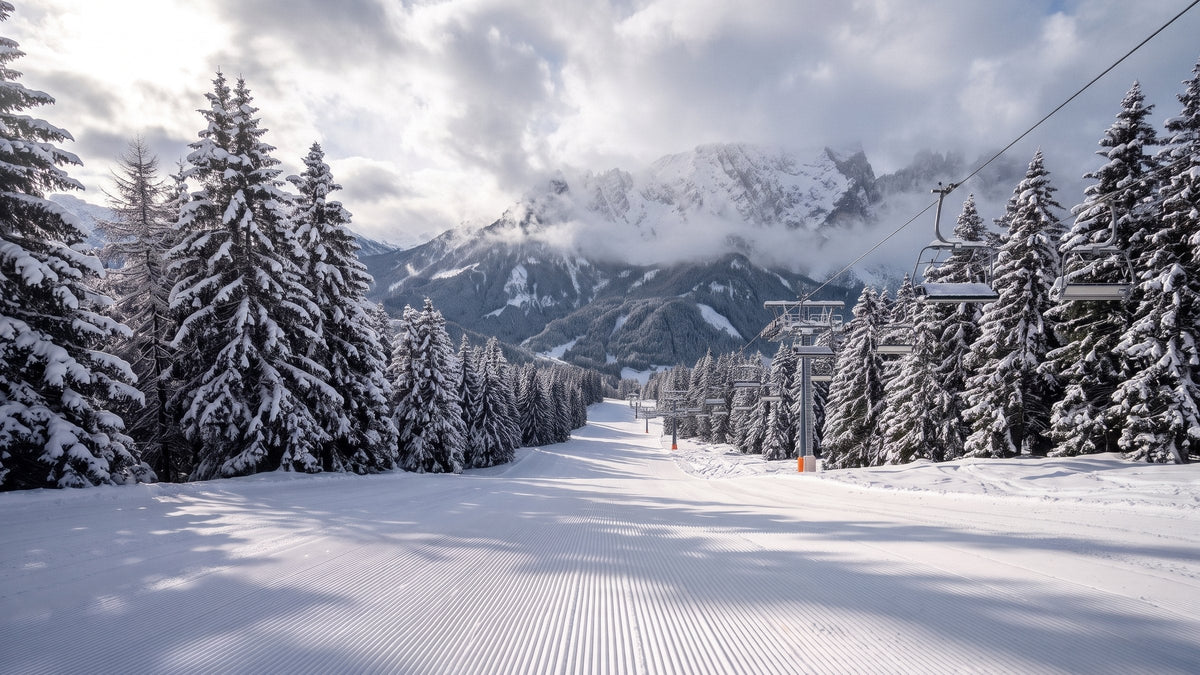
The same slope in four kinds of weather. Each one calls for a different lens category.
The answer at a glance
| The weather | Category | Light let through (VLT) |
|---|---|---|
| Fog, snowfall, heavy clouds | S1 | 43–80% |
| Sun and clouds, changing weather | S2 | 18–43% |
| Sunny days, clear sky | S3 | 8–18% |
| Very strong sun, high altitude | S4 | 3–8% |
If you go skiing a few times a year and want one pair of goggles for everything, the answer is S2.
What S1–S4 mean and what VLT is
VLT (Visible Light Transmission) is the share of light the lens lets through to your eyes. A lens with 20% VLT lets one fifth of the light through. The lower the number, the darker the lens and the stronger the sun it handles.
Categories S1 to S4 are simply VLT ranges. It's the scale manufacturers use for ski goggles. There is also S0 (80–100%), an almost clear lens for night skiing.
S1: the bad-weather lens
For: fog, snowfall, heavy clouds, very low light.
When the weather closes in, the snow and the sky blend into one. Shadows disappear and you can't make out the bumps on the slope. An S1 lens is light-coloured, lets a lot of light through and boosts contrast, so you can see the shape of the snow again.

Illustration: the same fog with a dark lens (left) and with an S1 lens (right).
Yellow or orange? In practice the difference is small. Both make the view brighter and are meant for low light.
When it doesn't work: on sunny days. It lets too much light through and will tire your eyes.
At Red Raven, S1 is not a separate pair of goggles but a second lens. Most of our goggles have a magnetic system: you take off the sun lens and put on the S1, fairly easily, even with gloves on. The lens is sold separately, with −15% if you get it together with the goggles.


S2: the all-around lens
For: days with sun and clouds, changing weather.

The #B Black Inferno, with an S2 lens.
It's dark enough that the sun doesn't bother you and light enough that you can still see when it clouds over. That's why it's the category we recommend to anyone who goes skiing a few times a year.
When it doesn't work: in thick fog you'll find it dark. That's where you want S1.
Most of our goggles are S2. See all ski goggles with an S2 lens.


S3: for sunny days
For: clear skies and strong glare off the snow.

It's darker than S2 and easier on your eyes when the sun is strong all day. A good choice if you mostly ski in good weather, in spring for example.
When it doesn't work: when it clouds over, or late in the afternoon when the light fades.


S4: for very strong sun
For: very intense sun, high altitude, glaciers.

The #B Black Silver, with an S4 lens.
It's the darkest lens: it lets through just 3–8% of the light. Two things to know before you choose it:
- It's not for driving.
- In clouds or fog it's very dark.
Many people choose an S4 lens for its looks, especially the silver mirror. We get it, it's one of our most striking lenses. If you're one of them, get an S1 lens too, for the days when the weather turns. The S4 goggles in our #B and #C lines take a second lens.


Lens colour is not the category
The colour you see from the outside is the mirror coating of the lens. It doesn't tell you how dark the lens is. Three examples from our own goggles:

- #B Black Light Blue: light blue mirror, S4 (4% VLT).
- #B Black Inferno: red-orange mirror, S2 (21% VLT).
- #B Black Purple: purple mirror, S2 (22% VLT).
The light blue and the red are the same goggles with a different lens, and yet one lets through five times more light than the other. So choose the category first and the colour second. On our site the category is shown on every goggle's page, and in the collection you can filter by the weather you expect.
A darker lens doesn't mean more UV protection
The category shows how much visible light gets through. Protection from ultraviolet (UV) radiation is a separate feature. A light-coloured S1 lens can block all UV, and it should.
In the mountains this matters more than you'd think. According to the World Health Organization, UV increases by about 10% with every 1,000 metres of altitude, and fresh snow almost doubles your exposure to it. And it can be high even when it's cloudy.
So whichever category you pick, check that the lens says 100% UV protection (or UV400). Our adult goggles and our spare lenses have 100% UV protection.
Which category to choose

I go 2–3 times a year
One pair of S2 goggles and you're done. It covers you on most days.
I go often, whatever the weather
S2 or S3 for the good days and an S1 lens in your pocket for the fog. That's what more experienced skiers usually do. The other option is photochromic goggles, which we look at right below.
I mostly ski in sunshine or at high altitude
S3 or S4, and an S1 lens just in case.
Photochromic goggles: the lens that changes on its own

Real frames from the video of the #E Clear Photochromic: the lens before and after UV light.
A photochromic lens darkens in the sun and clears when the light fades. Most of our photochromic goggles range from S1 to S3, so they cover everything from fog to sunshine without you changing anything. Two things to know:
- The change isn't instant. From what our customers tell us, it takes about 1–2 minutes.
- It costs more than goggles with a standard lens.
If you go skiing a few times a year, you don't need them: an S2 has you covered. They're worth it if you ski many days a season and don't want to bother with a second lens.


And for kids?
The same applies: for everyday use, S2. In our kids' goggles (ages 10–16), the Kids Pink is S2 and is the all-around choice. The Kids Blue is S4, so only for days with strong sun.


Frequently asked questions
Which lens is right for fog and snowfall?
S1. It's light-coloured, lets a lot of light through and boosts contrast on the snow.
Which category should I get if I want just one pair of goggles?
S2. It's the all-around lens, for sun and clouds.
Can I drive with an S4 lens?
No. S4 is very dark and is not suitable for driving.
Does a darker lens protect more from the sun?
It cuts more visible light, so it's easier on your eyes in bright sun. UV protection, though, is a separate feature and doesn't depend on how dark the lens is.
How fast does a photochromic lens change?
Not instantly. From what our customers tell us, it takes about 1–2 minutes.
Ski goggles or snow goggles: are they the same?
Yes. Some call them ski goggles, others snow goggles or a ski mask. The S1–S4 categories apply to snowboarding just the same.
See all Red Raven ski and snowboard goggles and filter by the weather you expect. If you want to see what else matters in a pair of goggles, read our goggle buying guide.
The images of mountain scenes are illustrative. The goggles shown are the real products.

Leave a comment
This site is protected by hCaptcha and the hCaptcha Privacy Policy and Terms of Service apply.