



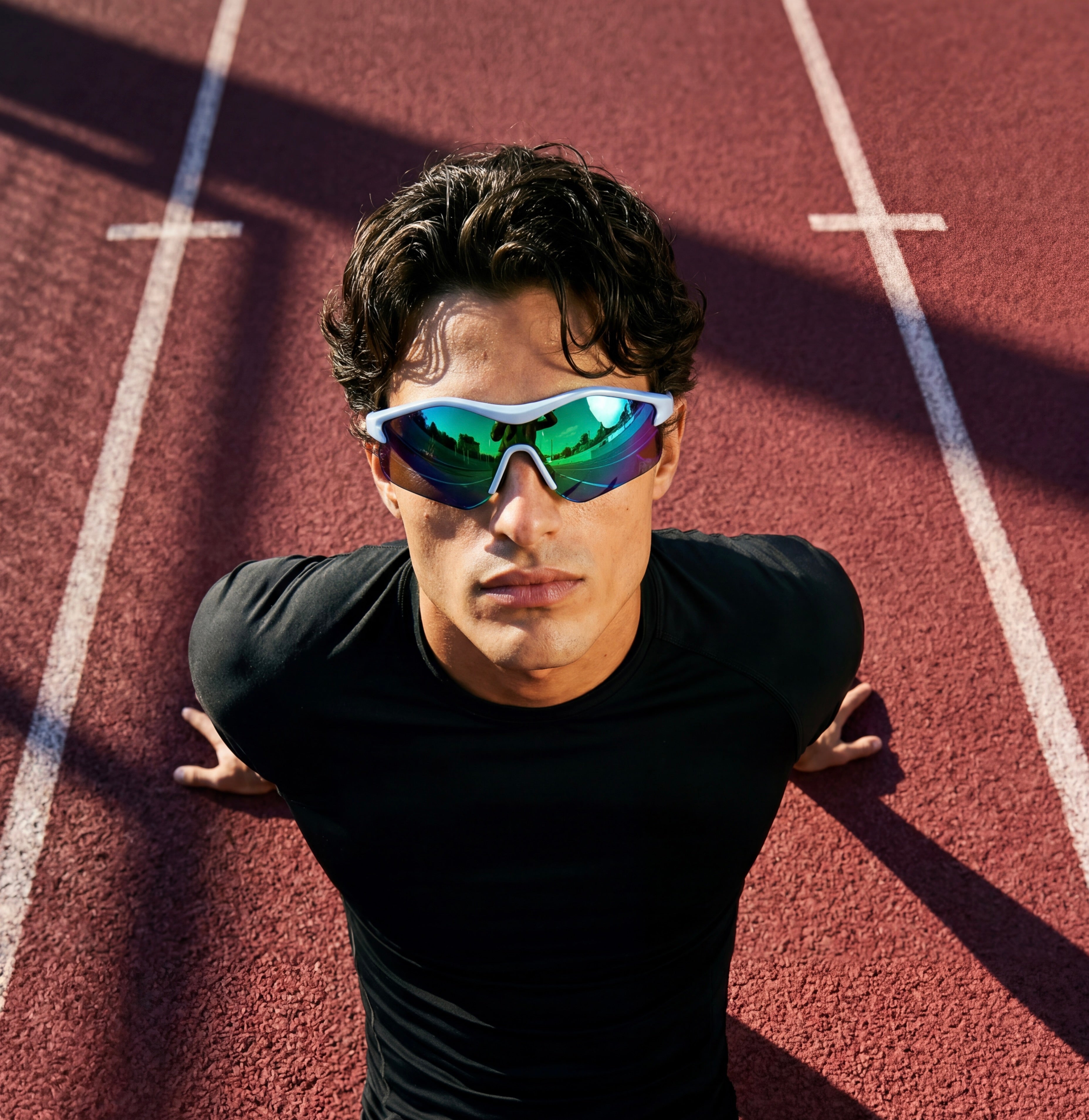
Running Sunglasses: What to Look For & Top Picks
Running is one of the simplest forms of exercise, but when the sun, sweat, speed, and continuous movement come into play, the details start to make a big difference. A simple pair of sunglasses might be enough for a walk or daily use, but it's not always the best choice for running.
Running glasses should offer stability, comfort, clear vision, and protection from solar radiation, without weighing down the face or slipping with every step. Especially when running outdoors, in bright sun, near the sea, on roads or trails, the right choice of glasses can make the experience much more comfortable.
It's not just about style. It's about fit, lens, materials, and practicality. The right athletic sunglasses for running need to stay in place, not bother you, protect your eyes, and help you see clearly in different lighting conditions.
In this guide, we'll look at what to consider before choosing running glasses, which features are truly worthwhile, and which Red Raven options are best suited for running.
Why you shouldn't wear your everyday glasses for running
Everyday sunglasses are primarily designed for lifestyle use. That means for walks, driving, the beach, holidays, or daily looks. They might have great aesthetics and sun protection, but that doesn't mean they're ideal for running.
When running, the face is constantly moving. Sweat increases, breathing becomes more intense, the body's temperature rises, and the glasses receive small, repetitive vibrations. A normal pair might start to slip down the nose, press behind the ears, or shift every time you change pace.
Also, heavier or fashion-oriented glasses don't always have the right grip. A thick acetate frame might look excellent in everyday life, but it could become tiring when running. Similarly, a very flat or small pair of glasses might not properly cover the field of vision, letting light in from the sides.
Running glasses should have a more functional approach. You want a lightweight frame, a stable fit, a lens with proper coverage, and materials that can withstand sweat and intense use. They don't necessarily need to be overly technical or "race-ready," but they should have some basic features that make them suitable for movement.
The difference is mainly noticeable after 20-30 minutes of running. Where a simple pair starts to bother you, a proper pair of sports glasses remains stable and comfortable.
What makes glasses “running-ready”
Running glasses must combine four essential elements: protection, stability, comfort, and clear vision. If one of these is missing, the running experience can become less practical.
First and foremost is UV protection. When running outdoors, your eyes are exposed to the sun for a long time. Protection from UVA and UVB radiation is essential, especially in summer conditions or during hours of intense light. It's not enough for the lens to simply be dark. A dark lens without proper UV protection is not an ideal choice. What you want is real protection, not just shading.
The second element is weight. The lighter the glasses, the easier it is to forget you're wearing them. This is important when running, because anything that presses on you or distracts you can disrupt your rhythm. Lightweight glasses reduce the feeling of weight on your nose and ears, while offering a more comfortable fit over longer distances.
The third characteristic is lens coverage. For running, glasses with a slightly more wrap or sport design usually work better because they provide better protection from light, wind, and glare. They don't always need to be overly large, but they should cover enough so that the sun doesn't bother you from the side.
Fourth is sweat and wear resistance. The frame must withstand daily movement, skin contact, sweat, and frequent transfers. Also, contact points, such as nose pads and temples, must be designed to provide stability without excessive pressure.
Proper athletic running glasses don't need to be complicated. They just need to work properly when you need them: to stay in place, protect you, and not bother you while you're running or exercising in general.

Lenses: Polarized or not for running?
One of the most frequent questions is whether polarized glasses are good for running. The answer is: it depends on where and how you run.
Polarized lenses reduce glare from horizontal surfaces, such as water, asphalt, windshields, metallic surfaces, or wet roads. This can be very useful if you are running near the sea, on a coastal route, on open roads with intense sun, or in areas where glare strains your eyes.
For example, if you run on a coastal front in the morning or evening, reflections from the water and the road can become annoying. In this case, a polarized lens can offer more relaxed vision and better comfort.
However, polarized lenses are not always necessary. For trail running, on uneven terrain or on routes with many shadows, some runners prefer non-polarized lenses because they want to see changes in the terrain, potholes, stones, or altitude differences more directly. If the polarized lens excessively reduces some reflections, it may in some cases affect the perception of depth or surface.
For urban running, polarized lenses are often a very good choice. For trail or more technical routes, it depends on your preference and experience. The most important thing is to choose a lens that gives you clear, comfortable and stable visibility in the environment where you run most often.
If you want a more detailed explanation of when they're worth it, you can read the complete guide to polarized glasses.
Frame & materials: lightweight, durability, sweat
The frame is just as important as the lens. When running, glasses shouldn't just look good. They need to withstand movement and remain comfortable as the intensity increases.
The first thing to look for is weight. A lightweight frame causes less fatigue and reduces pressure on the nose. When you run for a few minutes, you might not notice it. But when you cover longer distances, every unnecessary gram becomes apparent.
The materials must also be durable. Running glasses are often put in and taken out of bags, cases, cars, or lockers. They might fall, touch surfaces, or be used in high temperatures. An athletic frame must be flexible and not appear fragile.
The material's behavior in sweat also plays an important role. When you sweat, glasses that don't fit well start to slip. Also, if the material doesn't sit well on the face, it can leave marks or cause discomfort. For this reason, more running-ready designs usually have a more ergonomic shape and better weight distribution.
Semi-rimless or shield-style glasses are often popular for running because they offer a wide field of vision and a lighter feel. On the other hand, there are also acetate sport designs that offer a more stable and lifestyle-friendly look, without losing their athletic character.
The choice depends on your style and use. If you run often and want a purely sporty result, a lightweight semi-rimless design might be ideal. If you want glasses that you can also wear after running, then a sporty acetate design with a good fit might be more practical.
For general guidance, also check out the guide on how to choose the right glasses for you.
Stability: nose pads & temple grip
Stability is perhaps the most practical feature in running glasses. There's nothing more annoying than having to push your glasses up your nose every few meters.
Nose pads play a very important role. They help the glasses sit better on the nose and not slip easily when you sweat. In sports designs, nose pads are often softer or more ergonomic to provide grip without pressing.
Equally important are the temples. The temple grip, meaning the grip behind and around the ears, must be firm but not tight. If it presses too much, it will become tiring. If it's too loose, the glasses will move.
The ideal fit is one that feels stable from the first few seconds, but after a while, you forget you're wearing glasses. This is especially important for runners who cover distances, long-duration training, or run on uphill and downhill slopes.
If you're trying on glasses for running, do a simple check: put them on, gently shake your head, bend forward, and see if they stay in place. If they slip easily even without you sweating, they probably won't perform well when running.

For running in different conditions
We don't always run in the same conditions. Running at 12 noon in July is different from a winter morning or an afternoon run just before sunset. Therefore, the right running glasses must match your training style.
In summer, the main need is protection from intense light and UV radiation. Darker lenses or mirror lenses usually work best here, especially if you run on open, shadeless routes. Side coverage is also important, because the sun doesn't always come from the front.
In winter, needs change. The light may be lower, but reflections remain, especially on wet roads or cloudy days with intense diffusion. In such cases, a lens that is not too dark may be more comfortable for better visibility.
For afternoon or evening running, very dark glasses are not ideal. If you run at times when the light changes quickly, you need a lens that doesn't restrict you when the sun's intensity drops. In these cases, lighter shades or photochromic lenses can be very practical.
For trail running, the priority is clear ground reading. You want to see rocks, roots, shadows, and terrain changes. So you don't choose solely based on how "cool" the lens is, but on how clearly you can read the route.
If you mostly run in the city, you can move more comfortably between sport and lifestyle designs. But if you run regularly, at different times and in different light, it's worth looking at more technical options.
Photochromic lenses — the secret solution
Photochromic lenses, also known as transition lenses, are one of the most practical solutions for those who run in changing light conditions. Their main function is to adapt to light: they darken when the sun is intense and become lighter when the light decreases.
For running, this can be extremely useful. If you start your workout in the morning and the sun gradually rises, or if you run in the afternoon and the light changes, you don't need to switch glasses. A photochromic lens can cover more conditions with just one pair.
It is also useful on routes that go from sun to shade. For example, if you run in a park, on tree-lined roads, or on a trail, light changes can be intense. There, an adaptive lens helps you have a more consistent visual experience.
It's not necessary for everyone. If you always run at the same time and in the same conditions, a simple dark or polarized lens might be enough. However, if you want a more versatile pair of glasses for different times, photochromic lenses are definitely worth considering.
Top Red Raven for running
For running, we would primarily look at designs with a sporty line, a lightweight feel, good coverage, and a stable fit. At Red Raven, you can find options that suit different running styles and appearances.
If you want a more distinctly athletic aesthetic, semi-rimless designs like Edge, Flow, Motion, and Pulse are an excellent direction. They offer a more dynamic look, a wide field of vision, and a lightweight feel, elements that are well-suited for active use.
If you prefer something more stable with a regular acetate sport frame, then designs like Phantom and Raptor can offer a more lifestyle character, without losing their athletic energy.
For more everyday use, where you want glasses that can also be worn outside of training, you can also look at options from the men's glasses collection or the women's glasses collection, depending on the style you prefer.
FAQs
Are polarized glasses good for running?
Yes, they can be a very good option, especially for road running, coastal routes, or areas with intense glare. For trail running, some prefer non-polarized lenses for better ground reading.
How do I prevent slipping from sweat?
Choose glasses with a good fit, stable nose pads, and temples that hold correctly behind the ears. The glasses should stay in place without exerting excessive pressure.
Are photochromic lenses worth it for running?
They are especially worthwhile if you run at different times or on routes with changing light and shadow. They adapt to conditions and offer greater flexibility.
Can I run with regular sunglasses?
You can, but it's not always ideal. Regular glasses can slip, be heavier, or not provide the same stability and coverage needed for running.
How much should running glasses weigh?
There isn't an absolute number for everyone, but the lighter and more correctly balanced the glasses are, the more comfortable they will be over longer distances. The important thing is that they don't press on you and don't move while you're running.



Leave a comment
This site is protected by hCaptcha and the hCaptcha Privacy Policy and Terms of Service apply.