



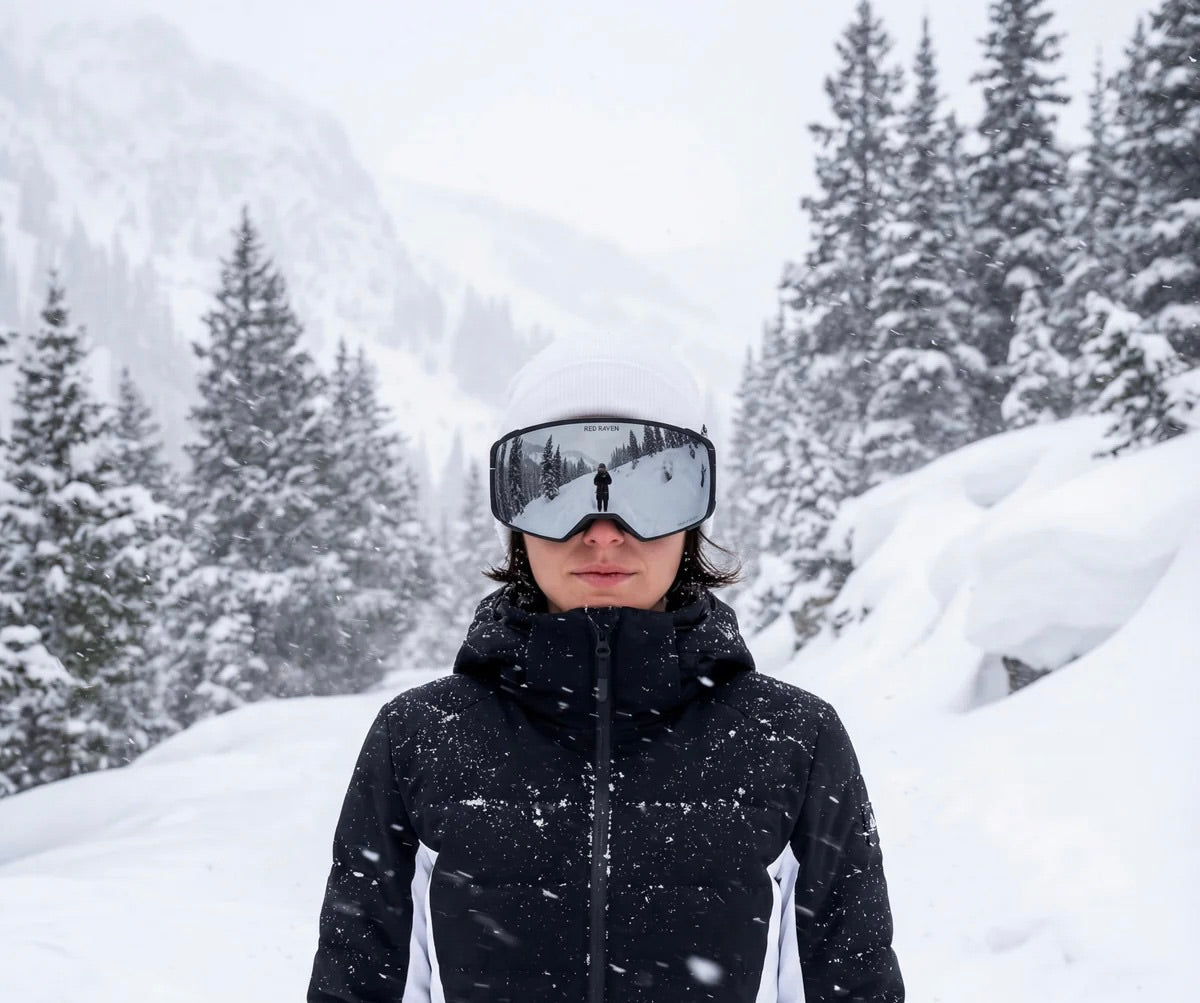
Ski & Snowboard Goggles: A Selection Guide for Clear Vision on the Mountain
Skiing and snowboarding are among the most enjoyable winter activities, but when you're on the mountain, conditions can change very quickly. Intense sun, snow, wind, fog, reflections, and low temperatures directly affect your vision and comfort.
That's why the right ski goggle isn't just an accessory for your outfit. It's one of the most important pieces of your equipment.
Ski and snowboard goggles must offer clear vision, sun protection, a comfortable fit with a helmet, and stability throughout the day. It's not enough for a goggle to look impressive. It must be able to perform in real mountain conditions: from a sunny descent to a run in flat light, cold, and wind.
In this guide, we'll look at what you need to consider before choosing goggles for skiing or snowboarding, which features truly make a difference, and how to choose the right model based on your use.
Why simple sunglasses aren't enough for skiing and snowboarding
Many wonder if they can ski or snowboard with simple sunglasses. The answer is that in some very mild conditions it might be possible, but it's not the ideal choice.
Sunglasses are primarily designed for everyday use, driving, walking, or the beach. On the mountain, however, the demands are different. Snow intensely reflects light, wind directly hits the face, speed increases, and temperature constantly changes. A simple pair of glasses can leave gaps at the sides, not adequately protect from the wind, or not fit properly under a helmet.
Snowboard goggles and ski goggles are designed precisely for these conditions. They cover a larger part of the face, provide better protection around the eyes, and offer a more stable fit. The elastic strap helps the goggle stay in place, while the larger lens provides a wider field of view.
Another important point is comfort. When wearing a helmet, beanie, or balaclava, simple glasses can press behind the ears or shift. In contrast, proper snow goggles fit over your equipment and work better with your helmet.
The difference is mainly noticeable after a few hours on the mountain. Where a simple pair of glasses starts to bother you, proper goggles remain stable, comfortable, and functional.
What makes a ski/snowboard goggle truly good
A good ski goggle must combine four key elements: protection, clear vision, comfortable fit, and compatibility with the rest of your equipment.
The first and most important is UV radiation protection. On the mountain, sun exposure can be intense, even when it's cold or cloudy. Snow reflects a large amount of light, causing eyes to tire more easily. That's why you need a lens that doesn't just darken the image, but truly protects from solar radiation.
The second element is the field of view. In skiing and snowboarding, you don't just look straight ahead. You need to be aware of the space around you: other riders, changes on the piste, icy spots, snow irregularities, or obstacles. Goggles with a wide lens aid peripheral vision and give you a greater sense of control.
The third characteristic is the fit. The goggle must sit firmly on the face without excessive pressure. The foam must create comfortable contact with the skin, while the strap must be easily adjustable to fit properly whether you wear a helmet or not.
Fourth is lens performance in different conditions. You need a different lens for intense sun, another for fog, and another for low light. That's why lens choice is perhaps the most important part when choosing snowboard or ski goggles.
Ski goggle lenses: what to look for
The lens is the "heart" of a goggle. It determines how clearly you see, how comfortably you move, and how well you adapt to mountain conditions.
On sunny days, darker or mirror lenses can help significantly, as they reduce light intensity and reflections from the snow. They are ideal for open slopes, clear skies, and intense sunshine.
In cloudy conditions, fog, or flat light, i.e., when the snow and sky look almost the same, you need a lens that aids contrast. In such cases, very dark lenses can be tiring or reduce visibility. Lighter shades, such as yellow, orange, or brighter lenses, can make terrain changes more distinct.
For mixed conditions, meaning days that start sunny and continue with clouds or fog, a more versatile lens is needed. If you frequently ski or snowboard at different times and on different mountains, it's worth having either a second lens or goggles with a lens that covers a wider range of conditions.
Also, the quality of the optics matters. A bad lens can distort the image, tire the eyes, or not perform correctly in changing light. Clarity of vision is important, especially when moving at speed.
Anti-fog, ventilation, and clear vision
One of the most common problems on the mountain is the fogging of the goggle. This happens when the temperature difference between the inside and outside of the goggle creates moisture on the lens.
Fogging can become particularly annoying during breaks, intense exertion, or when you have covered a large part of your face with a balaclava or scarf. If the air you exhale rises towards the goggle, moisture gets trapped and the lens starts to fog up.
That's why proper ventilation is important. Goggles with appropriate ventilation channels help air circulate, reducing the chance of fogging. At the same time, lenses with anti-fog treatment can provide more stable visibility in demanding conditions.
How you handle the goggles is also very important. Do not rub the inside of the lens vigorously, as this can damage the anti-fog coating. If the goggles get wet inside, let them air dry naturally instead of wiping them forcefully.
Also, when taking a break, avoid leaving the goggles on your helmet for a long time if it's snowing or humid. Proper use and maintenance help the goggle maintain its performance better.
Helmet compatibility and face comfort
Helmet compatibility is one of the most important features of a ski snowboard goggle. The goggle must sit properly on the face, but also work with the helmet without leaving a large gap on the forehead.
If there is a large gap between the goggle and the helmet, cold air, snow, or light can pass through. Conversely, if the goggle is pressed too hard by the helmet, it can shift or become uncomfortable. The correct fit is somewhere in the middle: stable, comfortable, and without pressure.
The strap should have sufficient length and good adjustment, so that it fits over a helmet. Ideally, it should stay in place without slipping. On many goggles, the inner side of the strap has a silicone grip for better hold on the helmet.
The goggle's foam also plays a big role. Soft and well-formed foam helps with comfort, reduces pressure points, and creates better contact with the face. If the foam is too hard or doesn't fit well, the goggle can become tiring after a few hours.
The best goggle is the one you forget you're wearing after a while. It doesn't press, doesn't shift, and doesn't force you to constantly adjust it.
Ski goggles for different lighting conditions
Conditions are not the same every day on the mountain. One day can be intensely sunny, the next foggy, and the next low light. That's why, when choosing ski/snowboard goggles, you need to consider where and when you use them most.
For intense sunshine, you need a lens that reduces light intensity and protects from reflections. Darker, mirror, or smoke lenses are usually more suitable for such conditions.
For cloudy or foggy conditions, a lighter lens can offer better contrast. On these days, you're not just interested in reducing light, but in clearly seeing changes in the snow. For afternoon skiing or lower light, very dark lenses are not ideal. In such cases, you need a lens that does not excessively limit the image.
If you snowboard or ski in different conditions, a practical solution is to have a second lens or a second pair of goggles. This way you can change depending on the weather. Clear vision is not a detail — it's a fundamental part of the mountain experience.
When you need a second lens or a second pair of goggles
If you go to the mountains once or twice a year, a good all-around pair of goggles might be enough. But if you ski or snowboard frequently, then a second lens or a second pair of goggles can make a big difference.
The main reason is lighting changes. A lens that is excellent in the sun can be too dark in fog. Conversely, a very light lens can tire you out in intense sunshine. By having a second option, you can better adapt to the day.
A second reason is practicality. If your first goggle gets wet, fogs up, or fills with snow, a second setup can save you. Especially on multi-day trips, it's useful to have a backup solution.
The third reason is style. Just as you change jackets or layers, you can also change goggles depending on your outfit or mood. If you have one more minimal and one more statement goggle, you cover more looks and conditions.
Top Red Raven for ski and snowboard
At Red Raven you can start with the ski/snowboard goggles collection, where you will find options with a snow-ready aesthetic and a strong mountain character.
If you want goggles for sunny days on the mountain, choose darker or mirror lenses that reduce light intensity. If you frequently go out in foggy or low-light conditions, focus more on lenses with better contrast and a lighter tint.
If style is what you're looking for, choose a lens and frame that match your helmet and outfit. If practicality is what you're looking for, start with the fit, field of view, and helmet compatibility.
FAQs
What is the difference between ski goggles and snowboard goggles?
In practice, most goggles can be used for both skiing and snowboarding. The main difference is not in the sport, but in the fit, lens, field of view, and helmet compatibility.
Why do ski/snowboard goggles fog up?
Goggles fog up when moisture gets trapped between the face and the lens, usually due to temperature difference or poor ventilation. Proper ventilation and careful use help reduce the problem.
Do goggles need to be helmet-compatible?
Yes. The correct goggles must fit well with the helmet, without leaving a large gap on the forehead and without being overly compressed. The adjustable strap helps with a better fit.
Do I need a second lens for skiing or snowboarding?
If you frequently ski or snowboard in different conditions, a second lens or a second pair of goggles can be very useful. One lens works better in the sun and another in fog or low light.
How do I clean my goggles properly?
Clean the outside of the lens with a soft microfiber cloth and avoid vigorous rubbing on the inside, especially if there is an anti-fog coating. If it gets wet inside, let it air dry naturally.
When should I replace my ski/snowboard goggles?
If the lens has scratches that affect vision, if the goggles constantly fog up, if the foam is worn, or if they don't fit properly with your helmet, then it's worth looking for a new option.

Leave a comment
This site is protected by hCaptcha and the hCaptcha Privacy Policy and Terms of Service apply.